Before London got complicated, a man came through here on his way back from the city. Salesman. The rolling-suitcase kind. Grumpy bastard. He’d been working in the capital—deals, meetings, the usual churn—and felt he’d been made a fool of.
Demons, he said. All through his human network. Hiding in plain sight. Pulling the wool over their eyes. Sitting in the same rooms. Eating at the same tables. Influencing things. Driving bargains way too hard.
I poured him another and thought about that.
He was mad about his margins being pinched. Sure. But if humans know they were rubbing shoulders with demons, who would it help?
In the middle of the Rising, that question answers itself. You don’t have the luxury. The demons are already there, already part of whatever is unfolding around you, and the knowing changes nothing except your blood pressure.
In peacetime—if that’s still a word that means anything—you could work alongside a demon for years. Share an office. Split a cab. Argue over invoices. Never know. And the reason you’d never know is not because they were hiding particularly hard. It’s because the gap between them and your most difficult human colleague was narrower than you’d find comfortable to admit. So what’s the point in knowing?
He finished his drink and left unconvinced. Still chasing that extra 500 quid.
You’re different. You should know. You need to know.
So here it is.
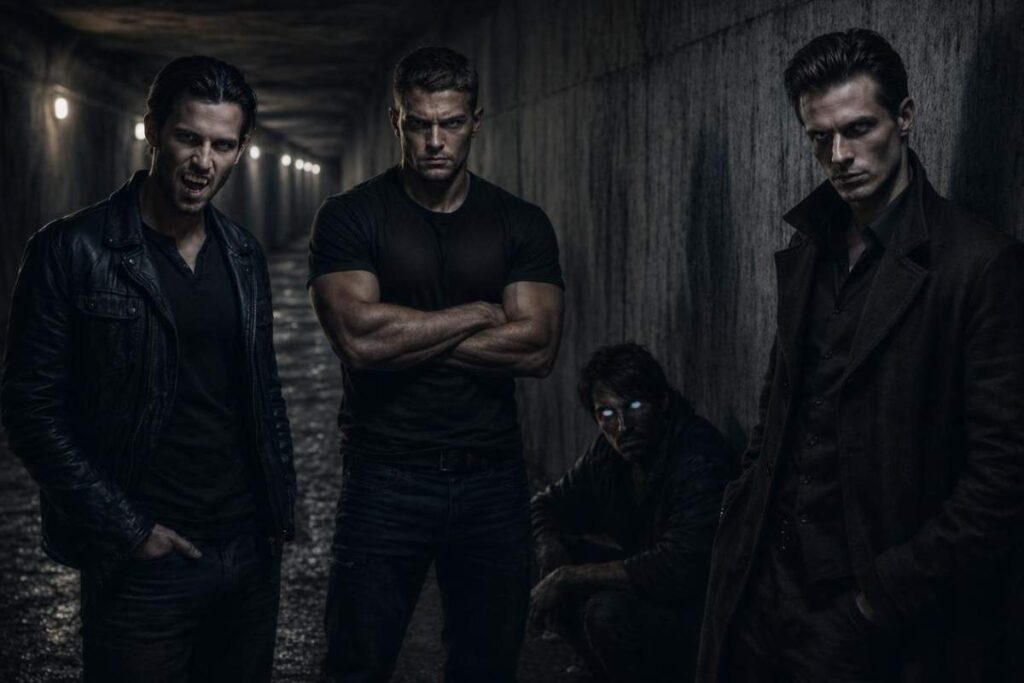
There are four lines. Pure ones, if you want the technical term. Soldiers. Leeches. Tricksters. Umbrae. Distinct origins. Clean through the centuries. Ancient. That matters to the people keeping records of it.
It doesn’t tell you much else.
People who need to move fast reach for nicknames. Everyone does—demons included, angels when they can be bothered. Blood Sucker. Soul Sucker. Bone Cruncher. It’s compression. Useful when you need to place a threat in under a second.
The compression is also where most of the mistakes get made.
There are people whose job it is to know the details. Kill spots. Weak points. How a particular breed moves when it’s cornered or provoked. Assassins, hunters—the ones the current climate has made necessary. That knowledge keeps them alive and I won’t argue with it.
But for the rest of us a catalogue is a starting point. Not a verdict.
Soldiers live above ground. Quietly, mostly. They have causes they’d die for and people they’d kill for and they don’t particularly advertise either. They’re ordered in the way that comes from genuine conviction rather than discipline imposed from outside. Family matters to them. Loyalty runs deep.
Conn O’Cuinn is a Celtic Soldier. I’ve had enough conversations with him to know that the word demon does considerably less work than people imagine when you attach it to his name. He has his cause. He has his people. Cross neither and you’ll find him good company. Cross one and the last thing you’ll register is how fast the room changed.
That’s not particular to him. That’s just an accurate description of the type.
Leeches are older. Crawled out of the swamp hungry and always stay that way. Attach a lot of importance to lineage. It is power to them. The sub-types vary more than the name suggests. Vampires are the ones people have heard of. Soul Suckers are more noticeable. Digestion is… visible.
There are others. They all feed. The method depends on the type. The intention depends on the individual.
Tricksters are the most expensive lesson in assuming you know what you’re dealing with. Bone Cruncher is what some call one subtype—accurate enough as a physical description. Tells you almost nothing about motive, which is precisely where a Trickster will have you if you’re not paying attention.
They don’t all want the same thing. They rarely look the same. That’s the point.
Umbrae work in the parts of a situation nobody’s looking at directly. Shadow-adjacent, if you need a rough translation. Whether that makes them more or less dangerous depends entirely on what you were planning to do in the dark yourself and how you want them to help you.
Try not to want them to help you.
Then there are the hybrids. Pure lines crossing—they’ve been doing it for millennia, long before anyone thought to document it. The result is something a catalogue won’t prepare you for. That’s a longer conversation. Another day.
Four lines and a handful of nicknames is a reasonable place to start.
Not a great place to stop.

To read the books mentioned in this post, go to: