The statistics coming out of rural England don’t alarm people the way they should.
I’ve been watching the pattern.
Not the cities. The cities are loud about their violence, wear it on the outside, make it visible and therefore manageable. No. The villages. The ones that have been here since before anyone can remember—where everyone knows everything and nobody says a word.
There’s a thing people misunderstand about the English village. They see the surface—the duck pond, hanging baskets, the war memorial, the cottages with the names instead of numbers—and they read it as quaint. Preserved. Safe like other old things.
That’s the mistake.
The land under those pretty gardens is ancient and it has a memory. Blood was spilled on it long before the roses went in. Agreements were made on it that nobody living remembers making. Bad promises. Magick worked. The earth absorbed all of it.
A layer just underneath ground level.
Compost.
And compost, given the right conditions, produces things.
What goes in bad, comes out the same way.
The Mother does her best, works on the transformation. But over time it still builds.
When the Risings come, it doesn’t create the darkness in places like these. It doesn’t corrupt the innocent or manufacture evil from nothing. The darkness uses what’s already there. What’s been tended quietly just below the ground level.
When Risings come, they shift the weight on that ground and whatever was living in the cracks of a place suddenly has room.
It doesn’t need an invitation after that.
The villages know. They protect their own. It’s something older than loyalty, closer to the way a body closes around a wound. The village has its own internal logic, its own unwritten rules about what gets seen and what gets stepped over, and that logic has been refined over centuries into something that looks from the outside like community spirit.
But community spirit is just a system. And systems, when the pressure changes, produce outcomes consistent with what they were always designed to produce.
I’ve noticed one particular case. Small village. Not this one. English, though.
The kind of place where the gardens are immaculate and the gate latches properly and the same faces appear at the same windows at the same hours every day.
A woman lives there. Alone, mostly. She has her routines and her rules and her own very specific accounting of the world—what constitutes order, what constitutes transgression, what must be recorded and addressed.
She keeps a careful list.
What’s on that list would not alarm you. What she does about it would.
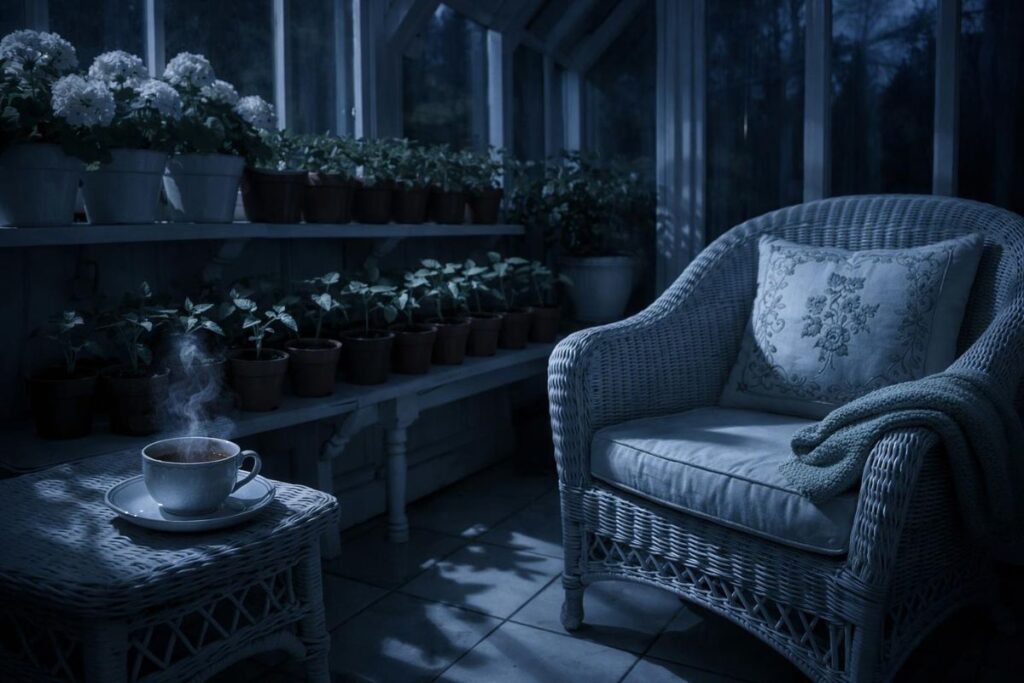
When I visited, her conservatory was clean and well-ordered. Smelling of compost and bleach.
I’ll leave it there.
The Author will be sharing the rest soon in Blood in the Hedgerows.
But know, the Rising finds people like her. It doesn’t make them. It just removes whatever kept the lid on, and then it watches from the far side of a hedge, seeing everything and recording nothing.
There will be more. I guarantee it.
When the dark gets organized, it starts in the cities. Loud, visible, documented.
But it feeds quietly. In the places that were already prepared for it.
In the villages.
In the gardens.
In the conservatories that smell of good clean earth and something else underneath, if you know what you’re looking for.
Watch the numbers.

To read the books mentioned in this post, go to: