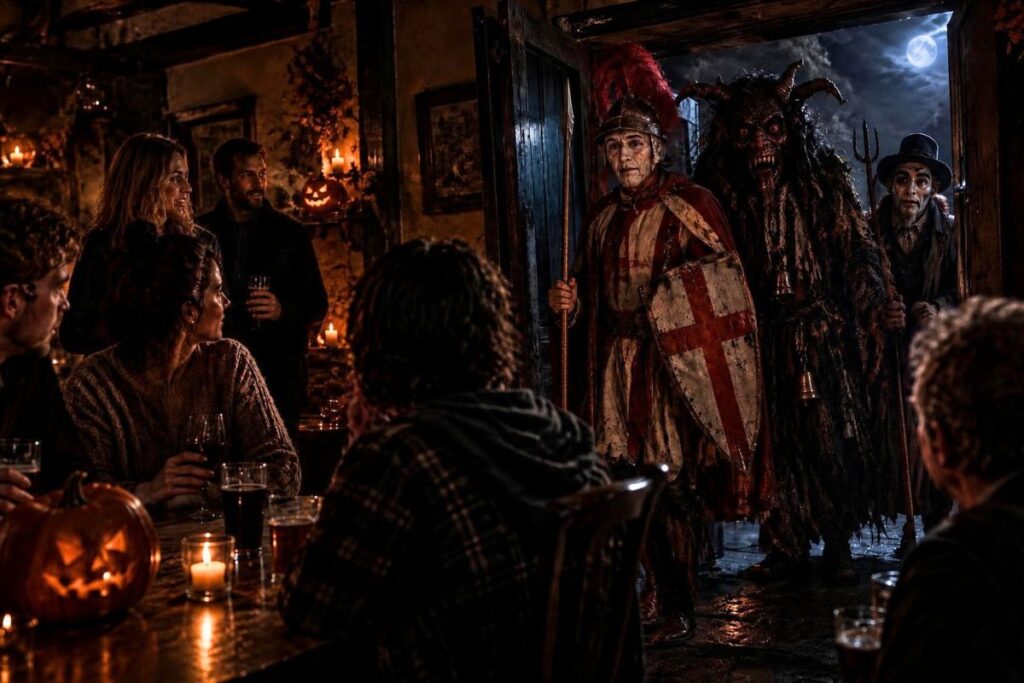
There was a man in a pub in Carlisle — this would have been the late nineties — who held a table for four hours without buying a round and left with three people’s phone numbers, one person’s car keys, and what I strongly suspect was a signed document of some kind.
Nobody saw him leave.
I noticed him when he came in. Noticed the way he moved through the room quietly. Noticed the clothes — good, but neutral. Noticed the way he listened when people spoke, head tilted just slightly, absorbing every, single word.
I didn’t speak to him.
He didn’t speak to me.
There are things that know better than to try.
Most demon types have a before. A point of origin that explains something of what they became. Soldiers were born, shaped, given purpose. Leeches were turned — a transaction, however violent. Umbrae are older than explanation.
Tricksters are different.
They were human once. Every one of them. They died — badly, usually, and having done something that ensured they didn’t go anywhere peaceful — and they remained in the DeadLand long enough to become something else entirely. Something that found its way back.
Think about that for a moment. Not a creature that was made demonic. A person who became one. Who had enough time in the dark to refine whatever it was in them that was already pointing in the wrong direction.
The folkloric record is full of them, under different names.
Every culture built a story around a thing like this. Origins maybe different but the intention of the final entity is the same. That’s not coincidence.
Here is the detail that matters most.
If you speak to a Trickster in our world — if they hear your voice — they know you. Not your name. Not your history. You. The frequency of whatever you are. For a human, that’s the soul laid partially bare. For anything else, it’s essence, nature, the thing underneath the form.
They use this.
They use it with extraordinary patience and precision. They are not impulsive. They are not clumsy. They are among the most intelligent entities currently operating on Earth and they have been practicing their craft for longer than most humans have existed.
They look human. They can be spectacular — the expensive coat, the silver pistol catching the light, the hat at exactly the right angle. When they want to be seen, they are seen. When they want to terrify, they show you how they died. Fire, plague, rot, smoke — whatever it was. It’s a reminder of what’s underneath the performance.
The performance, though, is usually enough.
The Risings gave them room to move.
While everything else was grinding and screaming and tipping toward catastrophe, the Tricksters were already inside the structures — financial, political, social. Moving pieces. Signing documents. Facilitating arrangements that nobody reads the fine print on until it’s too late.
They don’t fight wars. They make wars possible.
They are also the hardest to track after the fact. The documentation tends to disappear. The witnesses misremember. The contracts — and there are always contracts — have a way of becoming difficult to locate.
I know of one who operated in Nevada in the 1860s under the name of Trader. Souls and bargains, blood signatures, a beaver fur coat in the desert heat. The kind of entity around which stories accumulate because stories are the only way most people can process what they saw. He has continued to operate since then. Changed his name. Found an art gallery in downtown Las Vegas.
He’s making waves. The Author wrote about him in Skye Wolf. But there’s much more.
Every other demon type has, at some point, surprised me. Has done the unexpected thing, made the unexpected choice. Has occasionally, and against the odds, leaned toward something that wasn’t entirely dark.
Not Tricksters.
In all my years, I have never known one to do the right thing. Only the right thing for them.
Keep that in mind if the conversation feels like it’s going too well.

To read the books mentioned in this post, go to: